

|
|
Frequently Asked Questions
What is a fixed rate loan?
A loan which has an interest rate that remains constant throughout the life of the loan, usually available for 30 or 15 years, even for 20 or 40 years, depending on the lender.
What is a Balloon Loan?
A fixed rate loan that is amortized over a 30-year period but becomes due and payable at the end of a certain term (5, 6, 7, or 10 years). May be extendable or may roll over into another type of loan.
Why use a Mortgage Broker?
Using a real estate broker, particularly for first-time buyers, is a very good idea. There are lots of details - many of them financial - involved in home buying. A Mortgage Broker represents YOU by purchasing loans and highlighting strengths and minimizing weaknesses. A Bank or Savings and Loan represents the LENDER. Mortgage Brokers have a vast variety of programs to choose from. A bank only has one…their own.
What are my obligations if I fill out a loan application?
There are no obligations when you apply for a loan. With Zeus Mortgage you incur no up front cost.
What is an origination fee?
The amount charged for services performed by the company and/or mortgage company handling the initial application and processing of the loan.
What are lenders fees?
Lenders fees are fees that offset the cost of producing the loan. Different companies may refer to them by different names, such as processing fees or underwriting fees.
What is a discount point?
A discount point is paid to the lender to permanently buy down or lower an interest rate. It is usually a percentage of the loan amount. What is prepaid interest? This is the interim interest that accrues on the mortgage loan from the date of the loan closing to the beginning of the period covered by the first monthly payment. For example, If your closing date is scheduled for June 15, the first mortgage payment is due August 1st. The lender will calculate a per-day interest amount that is collected at the time of closing. This amount covers the interest accrued from June 15 to July 1.
How are rates determined?
Rates are determined by the 10-Year Treasury and other financial indicators. These rates can change daily or even more than once within the same day. The changes are based on many different economic indicators in the financial markets. To obtain current interest rate information you may email us or contact us at 713-275-9387. What is the difference between APR and interest rate? The APR (annual percentage rate) reflects the cost of your mortgage loans as a yearly rate. It also incorporates the cost to obtain the loan, such as discount fees and loan origination fee. The interest rate is the actual note rate.
How do I apply for a mortgage?
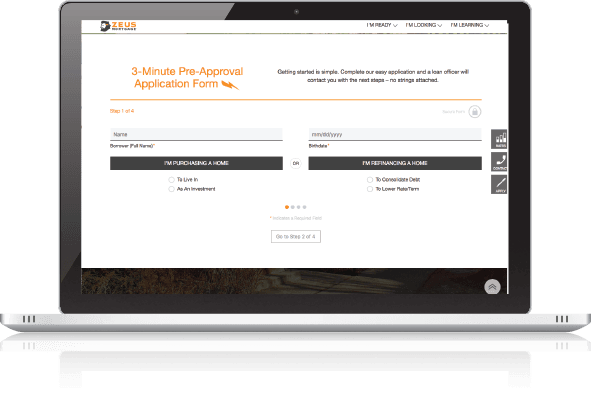
We can take your application in person or by phone. The initial application interview typically takes 30-60 minutes.
What document will typically be requested when I make application for a mortgage loan?
Typically, prior years' W2s, three pay stubs, and two bank statements in addition to the Purchase/Sales Agreement on the home you are buying. Documentation requests may vary by loan type and lender. See our Loan Checklist page for more detailed information.
Do most lenders require a homeowner's inspection?
No. A homeowner's inspection is generally requested by the buyer as a condition to the purchase of the home. Many home buyers, however, will make the purchase of their home contingent upon a homeowner's inspection. A homeowner's inspection should not be confused with an appraisal, which is required by most lenders in order to support the valuation of the mortgage security.
If I refinance my loan with my existing lender, will I have to pay all the closing costs again?
Typically, yes, there is a cost to process any new loan application. This cost may include fees paid to third parties, such as the appraisal provider and the title and closing providers. In most cases these costs can be rolled into your new loan, so you are not out of pocket any money. More over, your payment will also usually decrease.
How quickly can a lender close on my home loan?
Many lenders can facilitate closing 2 to 3 weeks after you have agreed on a purchase/sales agreement for a home. If you need more time, you can take as long as you need while still closing prior to any rate lock expiration dates. Many lenders require 30-60 days from purchase contract and application to closing.
What is PMI and why is it required?
Private mortgage insurance (PMI) is insurance written by a private company that protects the lender from losses in the event the borrower defaults on the mortgage. Borrowers are required to pay the premium for private mortgage insurance. Private mortgage insurance limits a lender's exposure to financial loss resulting from loan default. If you make a down payment of less than 20%, even if you have a good credit profile, lenders generally require private mortgage insurance.
What is title insurance?
Title insurance provides the lender and the buyer (if you purchase owner's coverage) with coverage for losses resulting from specific title defects listed in the policy. In cases where land and property have changed hands over time, there is always the possibility an error has occurred. If an error has occurred, it may be that someone else may be in title to or have an interest in the property that improvements encroach on property lines or that other similar problems may exist. In these scenarios, if you do not have title insurance you could lose your investment in your home. Lenders require "lender's coverage" to protect their investment and it only protects the lender. Owner's coverage is optional and provides separate coverage for the borrower.
What is an escrow account?
An escrow account is typically established at the time you close your mortgage loan. This account is held by the lender for the future payments of recurring items relating to the mortgaged property, such as real estate taxes and insurance premiums, as they become due. Lenders usually require you to pay an initial amount for each of those items to start the reserve account at the time of closing.
Why should I buy instead of rent?
Home ownership is about feeling good. It's a source of pride and personal satisfaction. But there are practical reasons why ownership is a good idea. The cost of the mortgage loan can be deducted from federal income and state taxes (in states with an income tax). Interest will comprise most of the monthly payment for more than half the years a home buyer pays on it, and the interest is deductible. Furthermore, property taxes paid by homeowners are deductible. Homeowners also may see the value of their homes increase as years go by.
Can someone with bad credit or a small down payment become a homeowner?
Yes, we do this all the time. There are federal mortgage programs designed to help such persons. Many local governments have programs, too.
Can a single mother buy a home?
Sure. It may be more challenging having only one income rather than two on which to qualify for a loan, but it can be done. Once you becomes familiar with the process, you should pick a good real estate agent and get pre-qualified for a loan. Again, there are federal and local home buying programs that can help. We can recommend some worthy real estate agents.
Should I use a real estate agent?
A good real estate agent guides you through the process and makes the experience easier. An agent will find out what's important to you in terms of house, neighborhood and price and look for a home that best fits the criteria. We can recommend some worthy real estate agents.
What is an Adjustable Rate Mortgage (ARMs)?
An adjustable rate mortgage is considerably different from a fixed rate mortgage. ARMs have only been around since the early 1980s. They were created to provide affordable mortgage financing in a changing economic environment.
An ARM is a mortgage where the interest rate changes at preset intervals, according to rising and falling interest rates and the economy in general. In most cases, the initial interest rate of an ARM is lower than a fixed rate mortgage. However, the interest rate on an ARM is based on a specific index (such as U.S. Treasury Securities or LIBOR). This index reflects the level of interest rates and allows the lender to match the income from your ARM payment against their costs. It is often selected because it is a reliable, familiar financial indicator. Monthly payments are adjusted up or down in relation to the index.
Most ARMs have caps-limits the lender puts on the amount that the interest rate or payment may change at each adjustment, as well as during the life of the mortgage. With an ARM, you typically have the benefit of lower initial rates for the first year of the loan. Plus, if interest rates drop and you want to take advantage of a lower rate, you may not have to refinance as you would with a fixed rate mortgage. An ARM may be especially advantageous if you plan to move after a short period of time.
As a relatively new phenomena, the purpose of an ARM is often misunderstood. If you're interested in hearing how an ARM might be right for you then give us a call and we can walk you through various scenarios.
What does LIBOR mean?
LIBOR is the London Interbank Offered Rate. It's similar to our fed funds rate, in that it represents the rate at which banks are willing to loan each other reserves. Unlike fed funds, which represents the rate on an overnight loan between banks, LIBOR is quoted for specific maturities. The LIBOR is a common index for Adjustable Rate Mortgages (ARMs).
What is a FICO score?
A FICO score is a credit score developed by Fair, Isaac & Co. Credit scoring is a method of determining the likelihood that credit users will pay their bills. Fair, Isaac & Co. began its pioneering work with credit scoring in the late 1950s and, since then, scoring has become widely accepted by lenders as a reliable means of credit evaluation. A credit score attempts to condense a borrower's credit history into a single number. Fair, Isaac & Co. and the credit bureaus do not reveal how these scores are computed. The Federal Trade Commission has ruled this to be acceptable. For more information on credit visit the Articles page of this website.
| |
|

 |
Home of 1st Month Free Mortgages* |
 |
First Time Home Buyer Experts |
 |
Access to over 200 Lenders Nationwide |
 |
One-Stop Mortgage Shopping |
 |
Free First-Time Home Buyer Seminar |
 |
Purchase/Refinance/Cash-out |
 |
Home Equity/Improvement
|
 |
Troubled Credit Mortgages |
 |
Interest Only ARMs |
 |
Free Qualifying |
|